October 7, 2026
“Good design makes me feel better. It makes the world better.”
This is not me, although I love a definition as simple as it is precise. This is Debbie Millman, master designer, answering the question “is the world getting uglier?” First in an essay for Time last August, then a few days ago on Ezra Klein’s podcast for The New York Times.
Her diagnosis: everywhere, things are getting bigger, louder, more visually instant, as if taking up space had become a value in itself. Her prime exhibit is Tesla’s Cybertruck. I can’t look at it without thinking of Mad Max, whose violence shocked me when I first saw it at a (too) tender age.

Millman draws a distinction I’m fond of. Ugliness can be intentional; it can challenge expectations and, in its own way, be beautiful. Vulgarity is something else: it overwhelms the environment everyone shares.
The distinction matters, because the obvious objection is waiting. Ugliness has often come before rupture. Impressionism, Expressionism, Dada, Bauhaus, Pop Art: all began as languages of defiance, breaking norms to find forms we later called beautiful. Why wouldn’t the Cybertruck be the Dada of our time?

Because Dada attacked a norm. The Cybertruck occupies a territory. One is a provocation addressed to someone; the other is indifferent to whoever stands next to it. Today’s vulgarity has a purpose, imposing a certain idea of power, success and progress. But its purpose is to take space, not to open it.
So yes, the world is getting uglier. In the vulgar sense.
In a recent New York Times essay, Bill McKibben notes that psychologists long described us as ill-equipped for slow-moving problems. Ours now arrive fast and pile up, and we weren’t designed for that either: our bodies, he writes, are paying the price.
The visual world we have built offers little relief. It gives us two options.
Sameness or vulgarity. Both have the same author: the market. Sameness, because the market likes things frictionless and distrusts specificity. Vulgarity, because the attention economy rewards extremes. The first is resignation dressed as efficiency. The second mistakes reaction for relationship, and forgets there is anyone else in the room.
The market is not an abstraction. It is a sequence of decisions, many made in meeting rooms where someone signs off on a brief. Choosing the safe grey or the loud chrome is rarely a design decision. It is a decision about how much the other person counts.
Designers like to call themselves agents of change. So do entrepreneurs. The phrase is worn out because it rarely says which direction. So here is mine: back toward the other.
It is not a soft idea. It is the first thing a designer is trained to do: imagine someone who is not you (their body, their hurry, their fear) and make room for them. In our trade, empathy is a method before it is a virtue. Which is also why we have no excuse when we skip it.
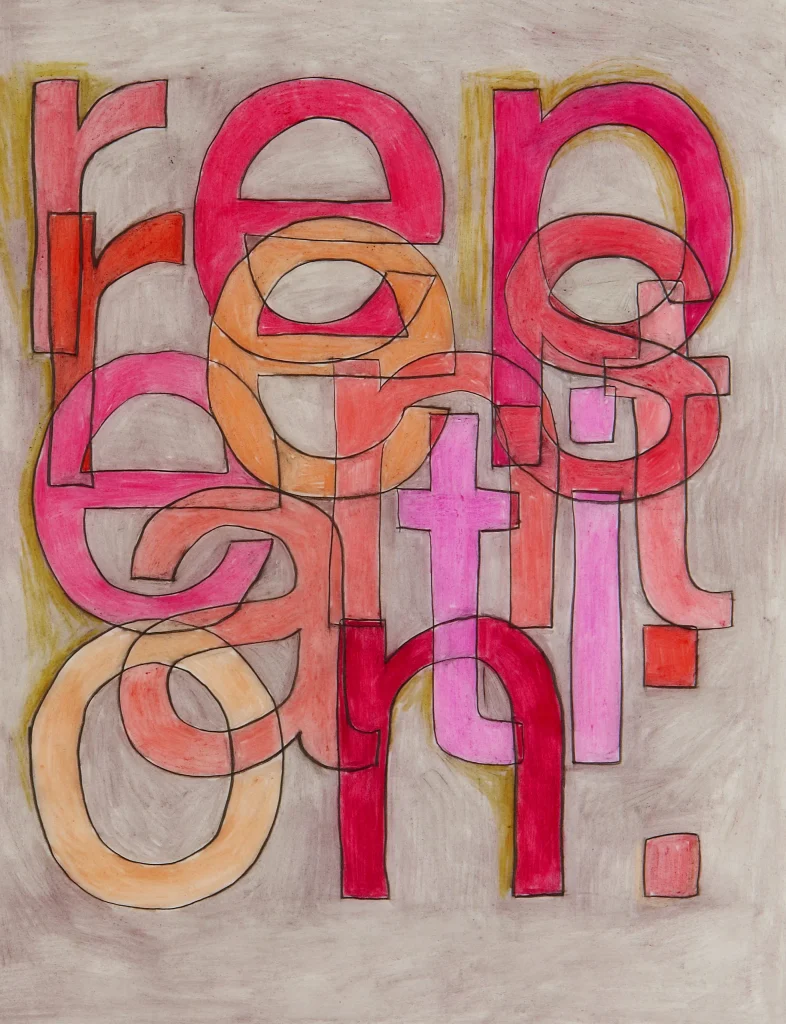
I live in a country that has never quite resolved its relationship with itself. Belgium did not dissolve its differences; it built a state around them. Walloons know the Flemish exist, and the other way round. Often reluctantly, sometimes resentfully, but always. Out of that obligation came a slow, unglamorous art of compromise. It is not beautiful in the Cybertruck sense. It is beautiful in Millman’s.
That is what vulgarity forgets and sameness erases: the other is there. Beauty is neither decoration nor taste. It is consideration made visible, a form that knows it is not alone. Designers alone cannot bring it back. But every brief, every identity, every object asks the same question: do we occupy the common space, or do we share it?
https://www.wired.com/story/owning-a-cybertruck
https://www.nytimes.com/2026/09/29/opinion/boring-politics-exhaustion.html?searchResultPosition=1
https://time.com/article/2026/08/18/is-the-world-getting-uglier
https://www.nytimes.com/2026/10/02/opinion/ezra-klein-podcast-debbie-millman.html